How to study diagrams, tables, and formulas inside a PDF
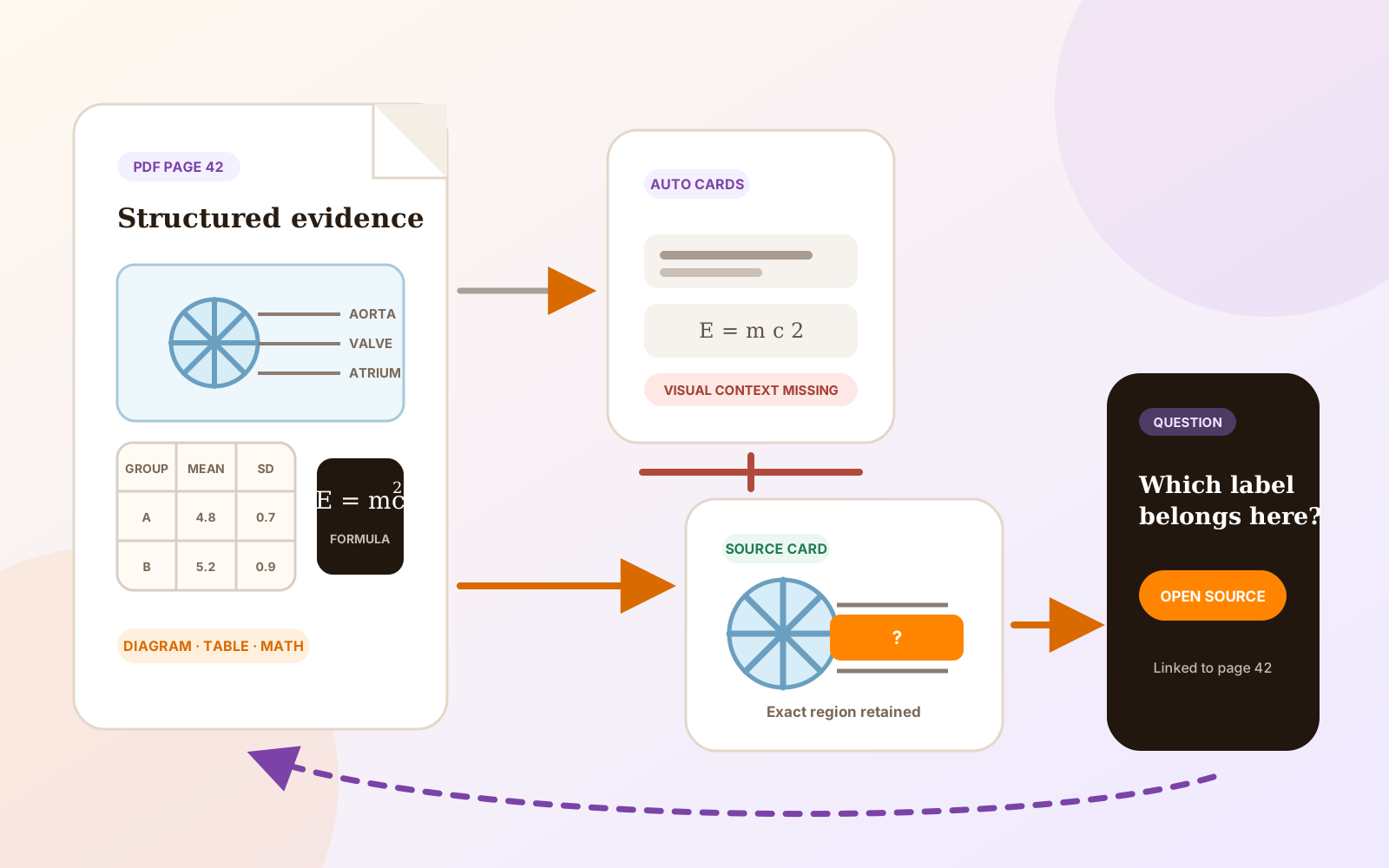
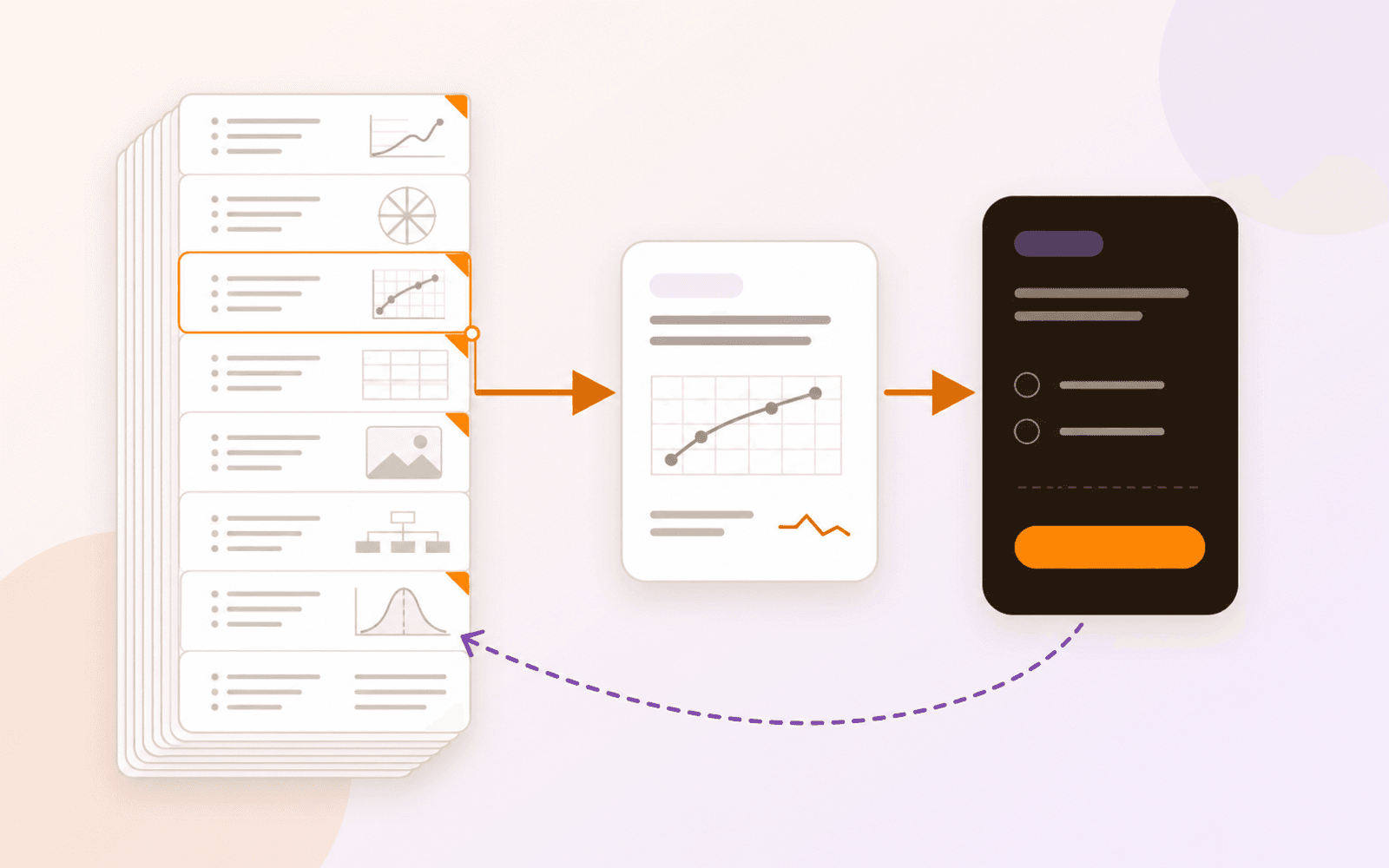
Create focused Questions from figures, table cells, equations, labels, and other structured university material while preserving the source page.
Direct answer
How can you practice diagrams, tables, and formulas without reducing them to plain-text flashcards?
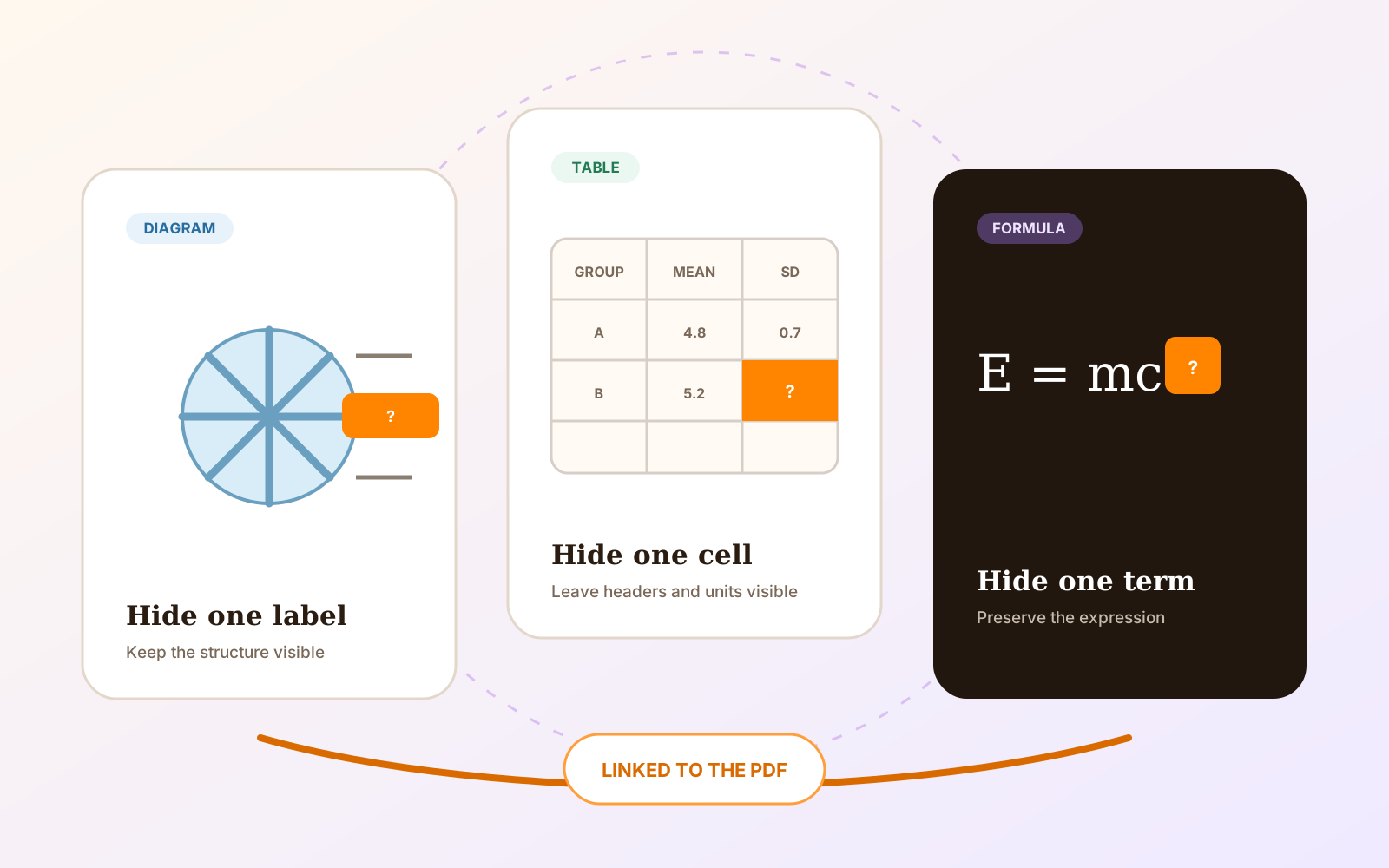
Capture the figure, table, or formula as a source-linked Card, then hide only the label, cell, variable, operator, or expression you need to recall. Keep each mask unambiguous, supply a typed answer when spelling or notation matters, and test the return link to the original PDF page. PDF Max can keep visual and mathematical Questions inside the same Study scope as ordinary text Questions without discarding the source layout.
Many university subjects are not naturally expressed as term-and-definition pairs. Anatomy uses labeled figures. Statistics uses tables. Engineering and physics use equations whose structure matters. A plain-text card can describe those objects, but it may stop testing the spatial or symbolic relationship you actually need to remember.
PDF Max Study can create Questions from source-linked image, table, formula, and text Cards. Occlusion places a mask over a selected part so that the surrounding structure remains visible while the answer is hidden.
If an automatic deck has already reduced the page to text, first read why AI flashcards from PDFs fail on diagrams and formulas. This guide focuses on the dependable manual authoring path rather than repeating that diagnosis.
The technique is most useful when the visible context points to one precise answer. A mask that hides half a page tests guessing and reconstruction, not focused recall.
Capture the structured source accurately
Open the PDF and choose Research → Workspace. Capture the smallest region that preserves the meaning:
- use Clip Image for a figure, chart, map, or labeled diagram;
- use Clip Table for structured rows, columns, headers, and values;
- use Clip Formula for an equation or mathematical expression; and
- use Clip Text when the target is a word or phrase inside prose.
Include the caption, units, legend, axis labels, or equation number when it disambiguates the material. Exclude unrelated page furniture and adjacent figures. If two panels use the same labels, capture the panel identifier as well.
For recognized formulas, compare the interpreted expression with the printed page before building Questions. A mistaken subscript, sign, or Greek letter can turn a visually polished Question into the wrong one. The image of the source remains valuable even when recognition is unavailable.
Choose a mask that asks one thing
Open the Card and choose Create Questions. The available composer reflects the Card’s content.
Hide labels in a figure
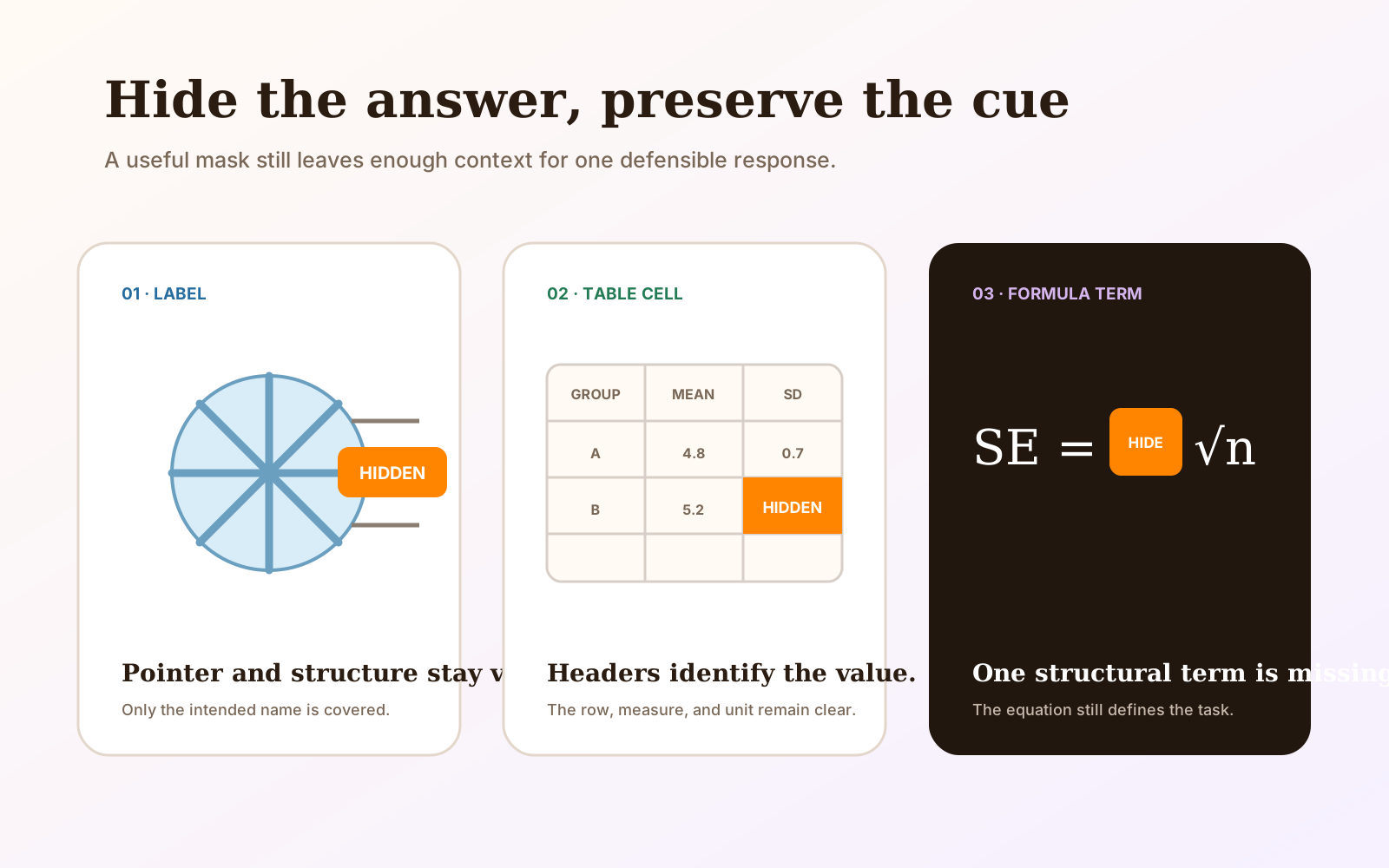
Place one mask over each label you need to recall. PDF Max can suggest likely label regions, but inspect every suggestion and adjust the mask so it covers the answer rather than the pointer, surrounding structure, or a neighbouring label.
Choose Cover all labels when the other answers would reveal the target. Choose Show the other labels when the surrounding labels provide legitimate orientation. For example, hiding every cranial nerve name may test independent identification; leaving the other labels visible may better test one structure within a known diagram.
Hide cells in a table
Select the values that carry the relationship you need to remember. Keep row and column headers visible unless the header itself is the target. A cell containing “0.42” is not a useful Question if the learner cannot see which measure, group, or unit it belongs to.
Use the option to include headers only when recalling the table structure is part of the task. Do not mask an entire row merely because it is easy to select.
Hide part of a formula
Mask a variable, term, operator, exponent, denominator, or larger expression according to the concept being tested. Begin with the smallest meaningful element. Repeated selection can expand through the expression’s structure when the complete term is the intended answer.
Examples include:
- the exponent in a decay model;
- the denominator of a standard error;
- the sign joining two energy terms;
- the variable isolated by a rearrangement; or
- the expression representing a boundary condition.
Formula recall is not the same as being able to use the equation. Pair a masked formula Question with a separate written Question asking when the equation applies, what its variables mean, or how a change affects the result.
Decide between flipping and typing
Answer by flipping is appropriate when you can judge the response reliably after revealing it. Answer by typing is useful when exact terminology, a short value, or notation matters.
Typed answers should remain short enough to grade meaningfully. PDF Max normalizes some superficial differences and can support accepted alternatives, but it does not treat an unrelated near miss as correct. For a derivation or extended explanation, use the typed field as a prompt to produce the work elsewhere, then judge against the source rather than forcing a paragraph into a short-answer comparison.
Keep related masks apart during review
Several masks from one figure belong to the same visual set. PDF Max keeps the masks available within the sitting while spacing related items through the queue instead of presenting them as an immediate sequence. For other Questions created from the same prompt Card, sibling controls can reduce the chance that one answer gives away another.
The schedule remains independent for each Question. Knowing one label does not mark the other labels as remembered, and a reverse Question is stored with its own memory rather than borrowing the original Question’s history.
After creating the set, run a short Practice session and test three things:
- The unmasked context identifies one intended answer.
- The revealed answer matches the visible page and any recognized source.
- Opening the Card returns to the correct PDF page and region.
Repair ambiguous Questions before beginning scheduled Study. Use the scheduled Study and Practice guide to decide whether the test run should affect future intervals.
How other apps handle visual study material
Rich study material is not unique to one product. The important differences are what the app treats as the source, which structures it understands, and what remains connected after authoring.
| Criteria | PDF Max | Compared app |
|---|---|---|
| Anki | Masks can target labels, table cells, text, and structural parts of recognized formulas while the Question retains its PDF source. | Native image occlusion provides rectangle, ellipse, and polygon masks with hide-all or hide-one modes in a deeply customizable card system. |
| RemNote | Uses source-linked text, image, table, and formula Cards inside the PDF workflow. | Supports image occlusion, cloze, multiple-choice, table-generated, multi-step, and other flashcard types inside linked notes and documents. |
| Quizlet | Creates Questions from exact PDF regions and returns to the source page. | Diagram sets place labeled points on one uploaded image for use in several set-based study activities. |
| Goodnotes | Keeps masks and Questions connected to Workspace Cards and the original document. | Study Sets combine text, images, and freeform input, then run in Smart Learn or Practice as their own file type. |
Anki is the stronger fit when custom note types, templates, add-ons, and deep card control are the priority. RemNote is stronger when the learning system is a broad linked knowledge base. Quizlet is compelling for shared sets and varied study activities, while Goodnotes is natural for handwriting-first notes. PDF Max is differentiated when the diagram, table, or formula must remain part of an editable, searchable, annotatable, and deliverable PDF.
See the detailed Anki, RemNote, Goodnotes, and MarginNote comparisons for broader product boundaries.
Build a mixed session from the same source
A useful exam scope often combines formats. One lecture might produce:
- a cloze Question for a definition;
- a typed Question for a unit or short value;
- an image mask for a labeled system;
- a table-cell mask for a result; and
- a formula mask plus a written Question about its assumptions.
Keep those Questions in the document, Frame, or selected-Card scope that reflects the course topic. If you are starting from scratch, follow the complete guide to turning a PDF into source-linked Questions. The PDF Max Workspace explains how the underlying Cards preserve evidence before they enter Study.
Review the supported Question families, source-return path, and plan boundary on PDF Max Study.