Scheduled Study or Practice: which should you use before an exam?
Choose between schedule-changing Study and schedule-neutral Practice for long-term recall, revision weeks, presentations, and last-minute rehearsal.
Direct answer
Should you use scheduled Study or Practice when preparing for an exam?
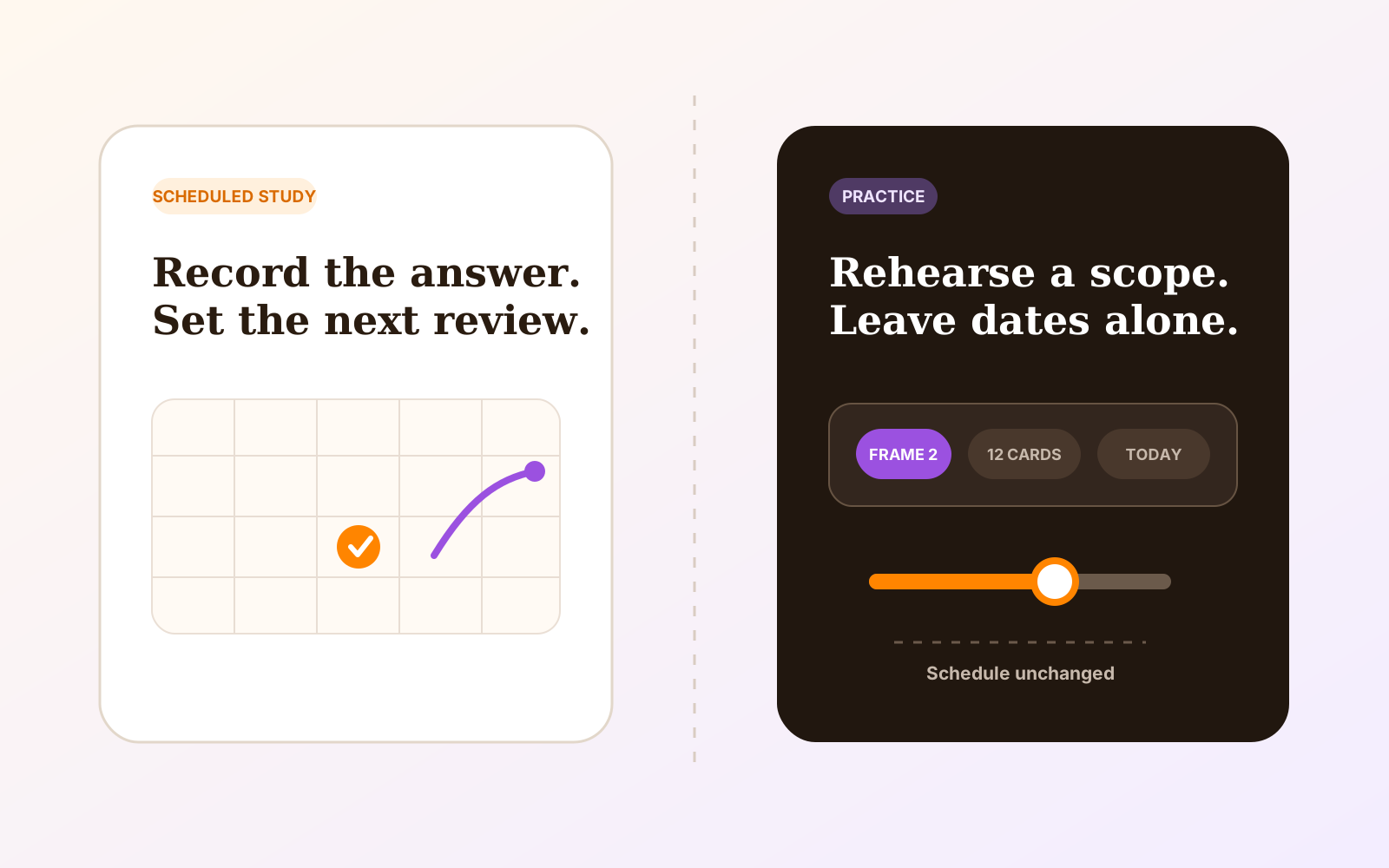
Use scheduled Study for the continuing review plan: reveal each answer, rate your recall, and let that Question’s history determine when it returns. Use Practice when you need an extra rehearsal of a document, Frame, selected Cards, due list, or saved preset without changing future review dates. Before an exam, keep the scheduled queue honest, then add focused Practice for the syllabus area or presentation you need to rehearse now.
“Study” and “practice” often sound interchangeable. In a spaced review system they can represent different decisions: one answer becomes evidence that changes a future review date, while another is an extra rehearsal you wanted today.
PDF Max makes that boundary explicit. Scheduled Study writes review history and changes when the individual Question returns. Practice Without Changing Your Schedule lets you rehearse a chosen scope while leaving the schedule untouched.
That distinction matters most before an exam, when the urge to review everything can overwhelm the signal your ordinary schedule has collected.
Use scheduled Study for the continuing memory plan
Scheduled Study is the normal path for Questions you want to retain over time. PDF Max builds a session from new and due Questions within the selected scope. During the session you attempt the answer, reveal it, and rate what happened. That rating is committed to the Question’s own history and produces its next interval.
Use scheduled Study when:
- you are following the daily due queue;
- the course continues for weeks or months;
- you want Progress to reflect actual scheduled reviews;
- you are adding a manageable number of new Questions; or
- you want schedule tuning to use a consistent history.
Answer honestly. A familiar-looking phrase is not necessarily a recalled answer. If you did not retrieve the information, use the forgotten response rather than protecting a streak or choosing a more flattering rating. Scheduling can only respond to the evidence you give it.
Use Practice for extra rehearsal today
Practice asks Questions without writing memory or moving due dates. It can include new Questions and Questions that are not due. Use it when the goal is immediate readiness rather than a scheduling decision.
Good reasons to use Practice include:
- rehearsing one lecture shortly before a tutorial;
- running through a Frame before presenting it;
- checking selected Cards after correcting your notes;
- refreshing one document before an open-book assessment;
- testing a saved topic preset during revision week; or
- doing a final pass without pushing every Question far into the future.
Practice is not a shortcut around the due queue. If you repeatedly practice only your favorite material and ignore scheduled reviews, the extra activity can feel productive while the neglected Questions continue to weaken.
A practical revision-week plan
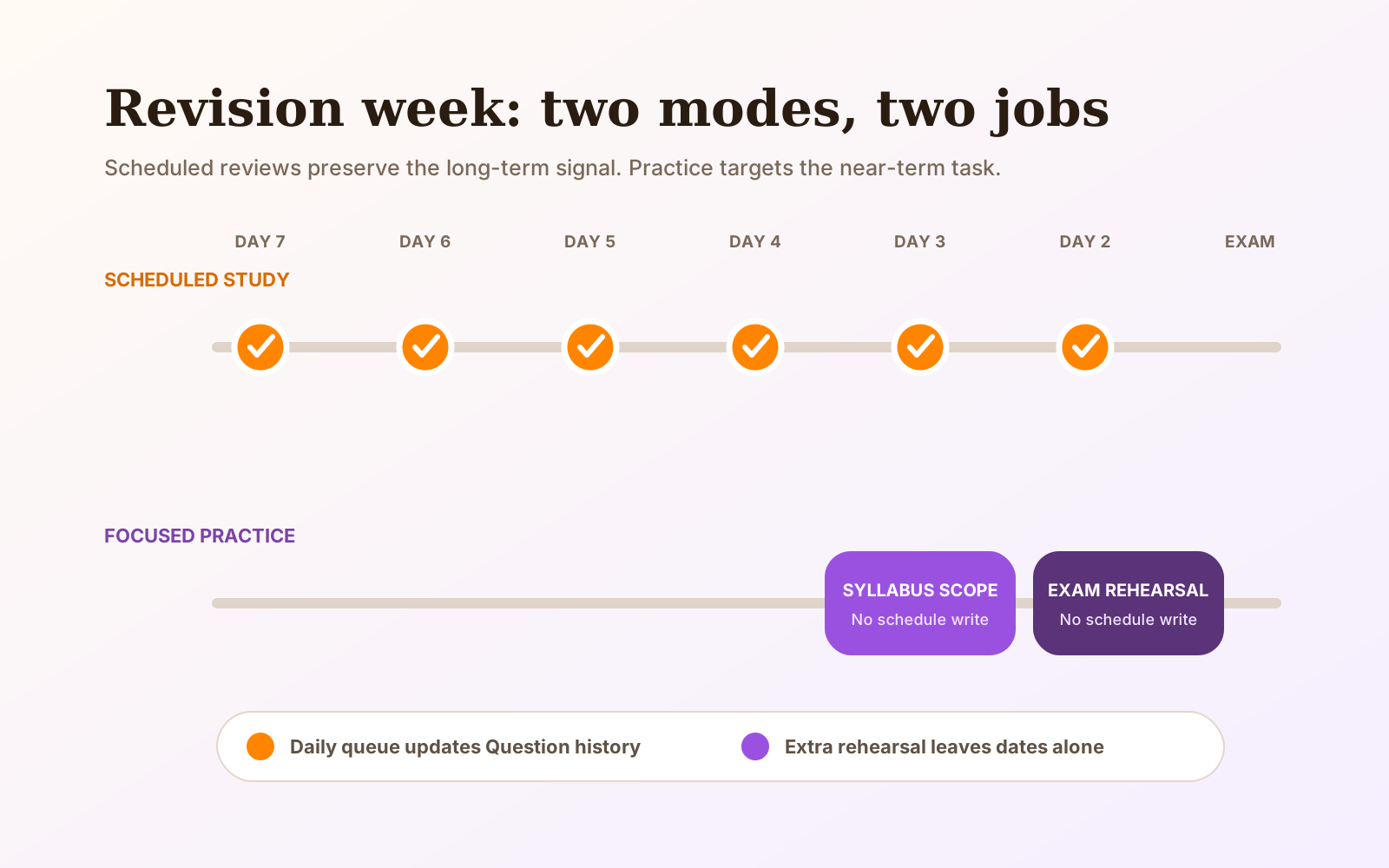
Seven days before an exam, use both modes for different jobs.
Days seven to four: keep the queue accurate
Complete scheduled Study for due Questions. Add new Questions only for important gaps you can still review meaningfully. Open Progress and inspect due work, lapses, weak Questions, and upcoming reviews rather than guessing from the number of Cards in a Workspace.
When an answer fails because the prompt is vague or the source changed, repair the Question. Do not keep rating a broken Question as forgotten; that measures the defect, not your memory.
Days three and two: practice by syllabus scope
Choose one document, Frame, selected group of Cards, or saved preset and run Practice. The goal is to find missing connections: a formula you can state but not apply, a diagram label you know without understanding the system, or two findings you cannot compare.
Return to the Card and PDF page for every surprising answer. Correct the source notes or Question before repeating it.
The final day: rehearse the expected task
Use a short Practice session for the material most similar to the assessment. For an oral exam, say the answer aloud before revealing it. For a calculation paper, write the relevant expression and units. For a presentation, practice the Frame sequence and likely questions.
Keep the ordinary scheduled session separate. The extra rehearsal should not turn every Question into evidence that your long-term interval must change.
Compare the same distinction in other learning apps
Major learning apps offer both ordinary queues and ways to focus, but the scheduling consequences are not identical. Check the exact mode before assuming that an early review is neutral.
| Criteria | PDF Max | Compared app |
|---|---|---|
| Anki | Scheduled Study records ratings; Practice explicitly writes no memory and moves no review date. | FSRS or the legacy scheduler calculates intervals; filtered decks and Custom Study can preview, cram, review ahead, or reschedule depending on configuration. |
| RemNote | Practice can include non-due Questions while remaining schedule-neutral. | Practice All can show non-due cards, but documented performance can still influence when cards become due, with early-review handling limiting the effect. |
| Goodnotes | Labels the extra mode Practice Without Changing Your Schedule and documents that boundary. | Smart Learn selects what to study and when; Practice reviews the complete Study Set and is positioned for a last-minute pass. |
| Quizlet | Maintains an individual spaced schedule and a separate neutral Practice mode. | Learn builds a personalized study path, while Flashcards, Test, Match, and other activities provide broader forms of rehearsal. |
The difference does not make one product universally better. Anki offers much deeper scheduler and deck customization. RemNote integrates flashcards with a broad linked knowledge base. Goodnotes fits notebook-led study, and Quizlet adds shared sets, classroom activities, and varied testing modes. PDF Max’s particular advantage is a plainly labeled schedule-neutral Practice mode inside a source-linked PDF workflow.
See the fuller Anki comparison, RemNote comparison, Goodnotes comparison, and MarginNote comparison before choosing a complete learning system.
Set up the scope before pressing Start
Open Study Home and choose the scope that matches the task. The entire Workspace is useful for broad review, but a document or Frame is usually clearer for a lecture-sized session. Selected Cards work well for a temporary problem area. Save a repeated scope as a preset so that “revise methods” means the same selection each time.
If the scope includes figures, tables, or equations, check the masks with the guide to studying structured PDF material before using those Questions as scheduling evidence.
Then make the mode an explicit decision:
- Choose Study when the answer should update history and the next interval.
- Choose Practice Without Changing Your Schedule when the session is extra rehearsal.
- Open the source when the answer needs context.
- Finish by checking what remains due rather than judging the day by session length.
If you still need to build the Questions, begin with turning a PDF into source-linked study questions. The complete feature and plan boundaries are documented on PDF Max Study.